Understanding AMD
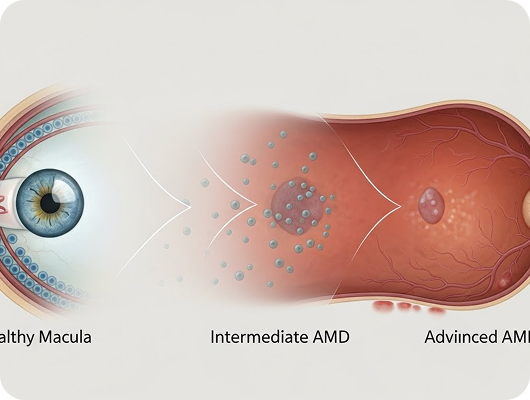
Age-related macular degeneration (AMD) affects the macula, the central part of the retina responsible for sharp, detailed vision. Over time, the macula can deteriorate, impacting reading, driving, and recognizing faces. Early detection and regular monitoring can significantly slow disease progression, especially in the early (dry) stage.
Common Symptoms:
- Blurry or distorted central vision
- Dark or empty areas in the center of vision
- Difficulty reading or seeing fine detail
- Colors appearing faded
What Causes AMD?
AMD develops due to aging changes in the retina and genetic and environmental factors. Risk factors include family history, smoking, high blood pressure, and UV exposure.
How AMD Is Treated
While dry AMD progresses gradually, wet AMD can advance rapidly and requires prompt treatment. Depending on the type and severity, treatment may include lifestyle and nutritional modifications, eye vitamin supplementation, and in some cases, intraocular injection therapy.
What Patients Can Expect:
Diagnostic Imaging and Monitoring
High-resolution retinal scans (OCT) detect early changes and guide treatment planning.
Lifestyle and Nutritional Guidance
Dr. Calotti provides recommendations on nutrition, supplements, and UV protection to help preserve vision.
Advanced Medical Treatment
For wet AMD, anti-VEGF injections are used to stop abnormal blood vessel growth and maintain visual stability.
Referring a patient for macular degeneration evaluation?
Contact us or visit our website to obtain a referral form and learn about co-management details.
Phone: (519) 752-3200
Fax: (519) 752-3277
Email: appointments@drcalotti.com